
A sustainable trading strategy is one that works consistently over time, not just during favorable market conditions. It's the difference between a trader who survives for years and one who blows their account in a few months. Building a sustainable strategy requires patience, rigorous testing, and a commitment to continuous improvement. At FFT, we've evaluated thousands of traders, and the ones who pass their evaluations and go on to build long-term funded careers all share one trait: they trade with a well-defined, tested strategy that they trust. In this guide, we'll walk through the complete process of building a sustainable trading strategy — from finding your edge to testing across market conditions to maintaining discipline under pressure.

Every sustainable trading strategy starts with an edge. Your edge is the specific reason you expect to make money over a large number of trades. It's not a vague feeling or a hunch — it's a quantifiable advantage. An edge could be a specific price action setup that occurs with high probability, a timing strategy that exploits market inefficiencies during certain hours, a deep understanding of a particular asset class that gives you insight others don't have, or a risk management approach that preserves capital during drawdowns. Your edge doesn't need to be complex or proprietary. Many professional traders use the same basic setups — trend following, mean reversion, breakout trading — but they execute them with precision and discipline. The key is identifying what your edge is and being able to articulate it clearly. If you can't explain your edge in one sentence, you don't have one yet. Spend time observing the market, testing different approaches, and finding the specific conditions where you consistently make good decisions. That's where your edge lives.

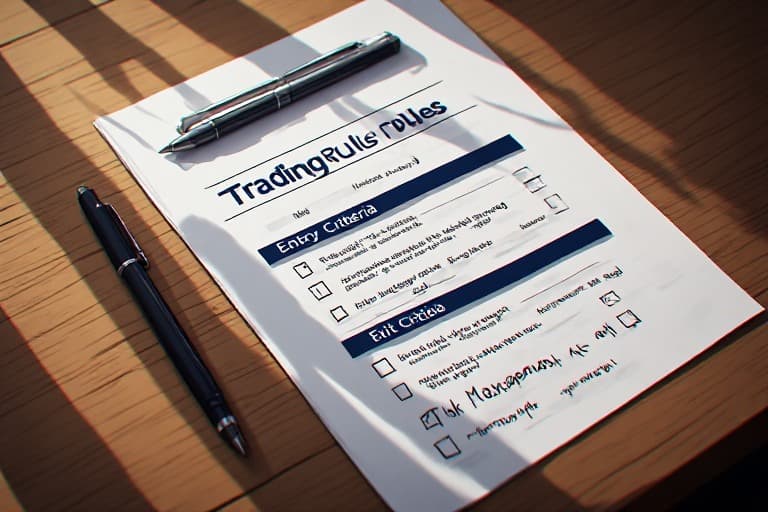
Once you've identified your edge, the next step is defining crystal-clear rules for every aspect of your trading. A strategy without rules is just gambling with extra steps. Your rules should cover three non-negotiable areas: entry criteria, exit criteria, and risk management. Entry criteria define exactly what conditions must be present before you take a trade. This includes the market structure, the specific setup, the timeframe alignment, and any confirmations you require. Exit criteria define how you take profits and how you cut losses. This includes your take-profit levels, your trailing stop rules, and your conditions for early exits. Risk management rules define how much you risk per trade, your maximum daily loss, your maximum drawdown, and your position sizing methodology. Write these rules down in a physical document or digital file. Keep them visible while you trade. Review them daily. The act of writing forces clarity, and clarity is the foundation of discipline. At FFT, we've seen traders pass evaluations not because they had the best setups, but because they had the most clearly defined rules and followed them without exception.
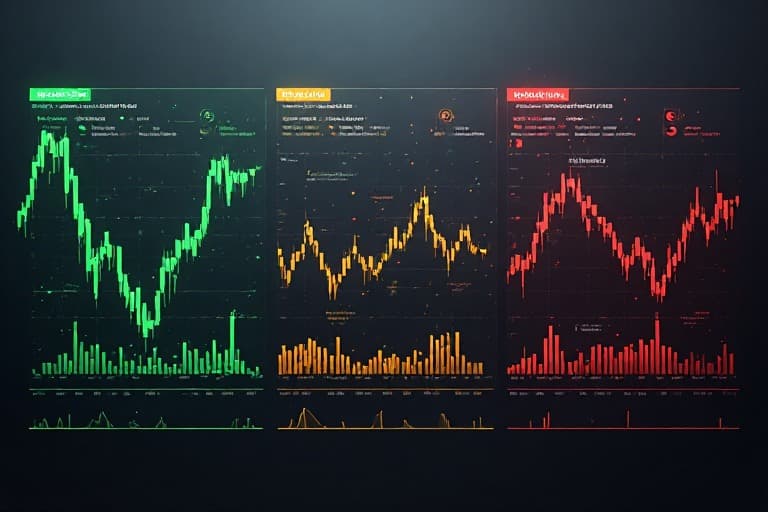
Testing your strategy across different market conditions is where most beginners fall short. It's easy to make money in a strongly trending market — almost any strategy that trades with the trend will work. But markets don't trend forever. They range, they chop, they crash, and they consolidate. A sustainable strategy must be tested through all of these conditions. You need to know: Does your strategy work in bull markets? In bear markets? In sideways markets? During high volatility? During low volatility? Around major news events? During different trading sessions? The only way to answer these questions is through systematic testing. Run your strategy on historical data covering at least two years of varied market conditions. If you don't have the tools for automated backtesting, manually review charts and mark where your strategy would have entered and exited. Track the results: win rate, average win, average loss, maximum drawdown, and profit factor. If your strategy shows positive expectancy across all market conditions, you have something worth trading. If it only works in trending markets, you need rules for what to do when the market ranges — and that might mean sitting on your hands.
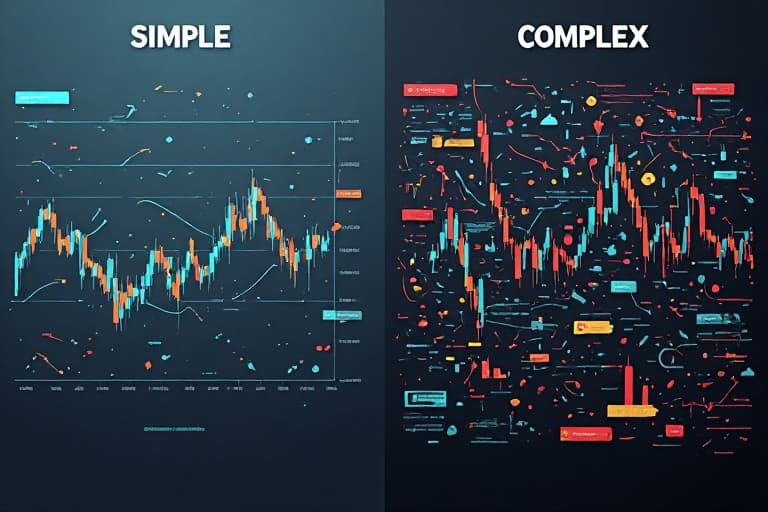
Simplicity is a feature, not a bug. The best trading strategies are often the simplest. Complex strategies with multiple indicators, conditional rules, and discretionary elements tend to fail under pressure because they require too many decisions in real time. When you're in a trade and the market is moving against you, you don't want to be analyzing whether indicator A conflicts with indicator B. You want a simple rule: 'If X happens, I exit.' Simplicity also makes testing easier and more reliable. A strategy with three clear rules can be tested with high confidence. A strategy with twenty conditional rules will have curve-fitting problems — it will look great on historical data but fail in live markets. Focus on a few high-probability setups and master them. If you're a trend follower, maybe your strategy is just 'trade pullbacks to the 20 EMA in the direction of the daily trend.' That's it. One setup. Master it completely before adding a second. At FFT, the traders who pass evaluations consistently are the ones who can describe their entire strategy on an index card. Complexity does not equal sophistication.
Risk management is not a separate component of your strategy — it IS your strategy. The best entry criteria in the world won't save you if your risk management fails. A sustainable strategy has risk management baked into every rule. Your position sizing should be mathematically derived from your risk per trade and your stop-loss distance, not based on how confident you feel. Your maximum daily loss should be a hard stop — when you hit it, the trading day ends. Your maximum drawdown should be a line in the sand — when you hit it, you stop trading and review. These rules protect you from the two biggest account killers: catastrophic losses and emotional decision-making. At FFT, our evaluation rules enforce many of these principles, but the traders who truly succeed are the ones who internalize them and make them part of their daily process. Risk management is not exciting. It doesn't feel like 'trading.' But it's the reason you're still in the game after a year while others have blown their accounts.

Psychology and strategy are inseparable. You can have the best-tested strategy in the world, but if you can't follow it when you're down 3% for the day, it's worthless. The most sustainable strategies are designed with psychology in mind. They include rules that prevent common emotional mistakes. For example, a rule that you must wait one hour after a losing trade before entering another prevents revenge trading. A rule that you must move your stop-loss to breakeven once the trade moves 1R in your favor prevents the anxiety of giving back profits. A rule that you only take trades that meet every single criterion prevents FOMO trading. These aren't just risk rules — they're psychological guardrails. Build your strategy knowing how you behave under stress. If you know you tend to overtrade after a win, add a rule that limits you to one trade per hour. If you know you hesitate on valid setups after a loss, add a rule that you must take the next valid setup regardless of how you feel. The best strategies are the ones that work with your psychology, not against it.

Forward testing on a demo account is the bridge between backtesting and live trading. Backtesting tells you if your strategy worked in the past. Forward testing tells you if it works now, in real market conditions, with real emotional pressure (even if the money isn't real). Spend at least 30 days forward testing your strategy before committing to an evaluation. Treat it exactly like a live account: follow all your rules, respect your risk limits, and track every trade in your journal. The goal isn't to make money on the demo — the goal is to prove that you can execute your strategy consistently. If you can't follow your rules on a demo account, you won't follow them on a live account. At FFT, we've seen traders rush through demo testing, pass their evaluation, and then fail their funded account because they never actually proved they could follow their own strategy. Don't rush this step. It's the most valuable free education you'll ever get.
Markets evolve, and your strategy must evolve with them. The forex market of 2024 is different from the forex market of 2020. Volatility patterns change. Correlation structures shift. Algorithmic trading changes how price moves. A sustainable strategy includes a process for regular review and adaptation. Schedule a monthly strategy review. Look at your journal data: what setups are working? What setups are failing? Are there certain market conditions where your strategy consistently loses? Are there times of day or days of the week where you perform poorly? Use this data to make small, incremental improvements. Don't overhaul your strategy based on a bad week — that's curve-fitting. Make changes based on patterns that persist over at least 30-50 trades. At FFT, we encourage traders to keep a 'strategy evolution log' where they document every change they make and why. Over time, this becomes a record of your development as a trader and a powerful tool for understanding what actually works.
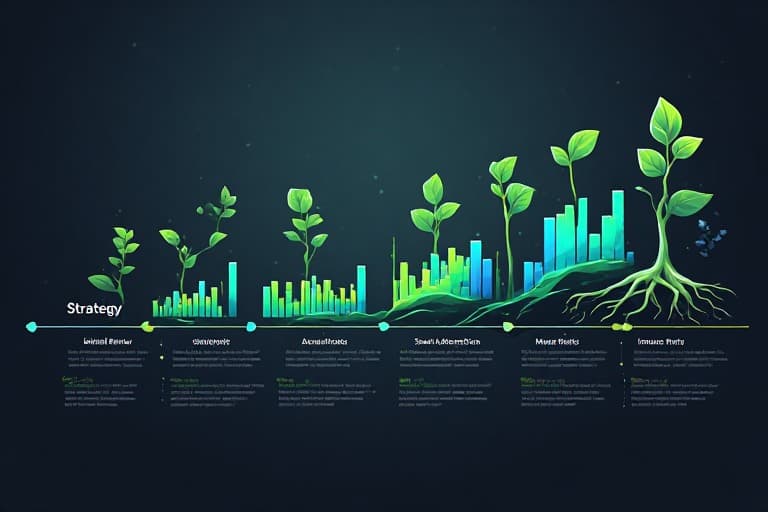
The final piece of a sustainable trading strategy is the understanding that you are not your strategy. Your strategy is a tool. You are the craftsman. A great carpenter can build a beautiful table with a simple saw. A poor carpenter with the most advanced tools will build a wobbly mess. The same is true in trading. The strategy provides the framework, but your execution determines the outcome. Focus on developing the skills that make any strategy work: discipline, patience, emotional regulation, and risk awareness. These skills transfer across strategies, markets, and timeframes. They are the true sustainable edge. At FFT, we're not just looking for traders with good strategies. We're looking for traders with the character to execute them. Build a strategy you can trust, develop the discipline to follow it, and you'll build a career you can be proud of.