
Risk management is the foundation of successful prop trading. Without it, even the most profitable strategy will eventually fail. At FFT, we believe traders should respect the risk, protect the account, and trade smart. Understanding how to manage risk isn't just about protecting your evaluation account — it's about building the habits that will make you a consistently profitable funded trader. In this guide, we'll cover the essential risk management principles that every prop trader needs to know, from position sizing to drawdown limits, and explain why these rules exist and how to work with them instead of against them.
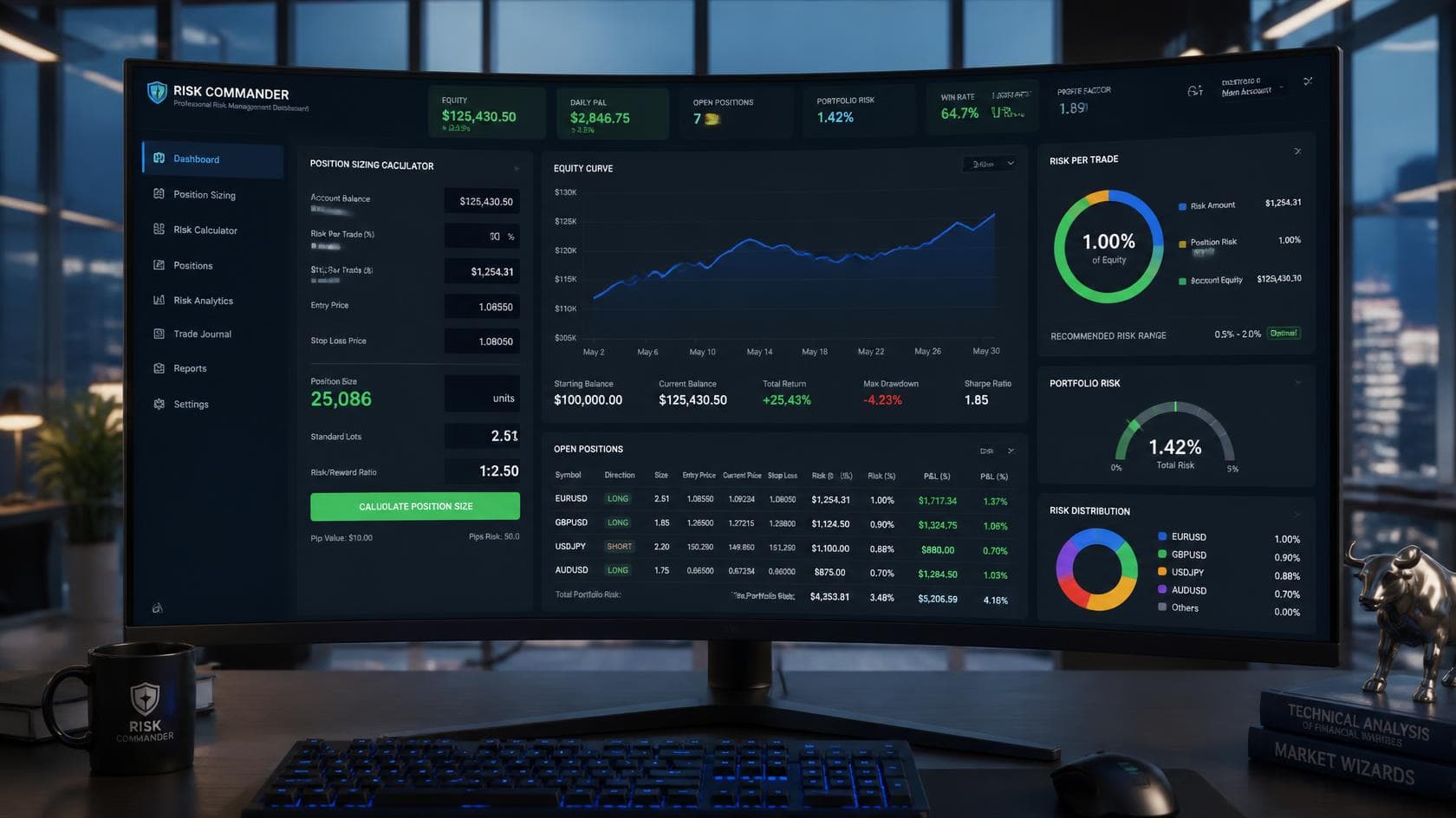
The most fundamental rule in prop trading is simple: never risk more than 1-2% of your account on a single trade. This isn't a recommendation — it's a requirement for survival. When you risk 5% or 10% per trade, a few consecutive losses will wipe out your account before you ever have a chance to find a winning streak. The math is unforgiving. A 10% loss requires an 11% gain just to break even. A 50% loss requires a 100% gain to recover. By keeping your risk per trade small, you ensure that no single loss can do catastrophic damage to your account. This principle applies regardless of how confident you feel about a trade. Confidence is useful, but it's not a risk management tool. Position sizing based on a fixed percentage of your account is.
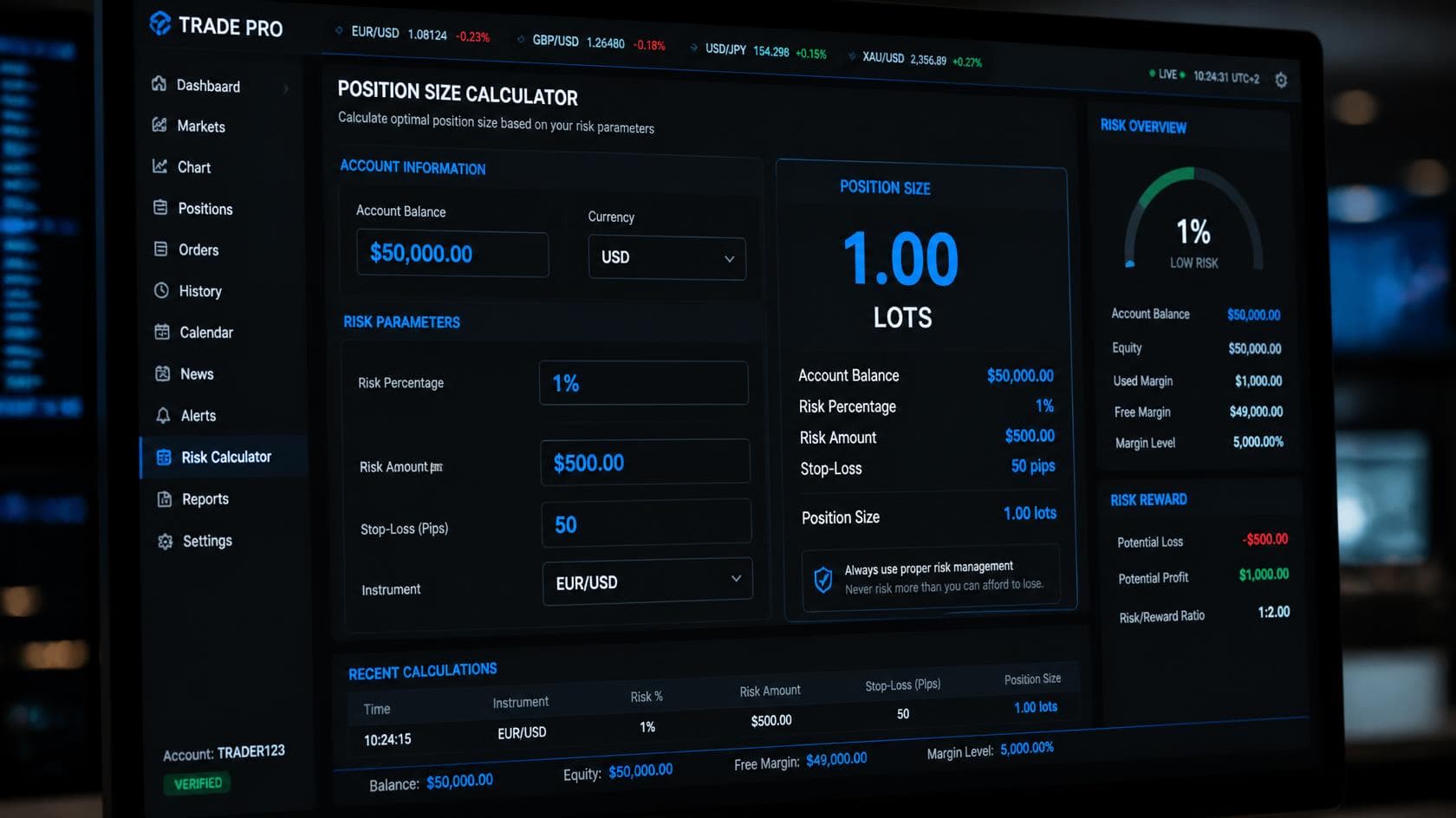
Stop-loss discipline is the second pillar of risk management. Every trade must have a stop-loss, and that stop-loss must be placed based on your analysis, not your emotions. A stop-loss defines your maximum loss before you even enter the trade, which means you know exactly how much you're risking. This is what allows you to keep your risk per trade within the 1-2% limit. Without a stop-loss, you're essentially betting that the market will eventually go your way. That might work sometimes, but over the long run, it's a losing strategy. Markets are unpredictable, and even the best analysis can be wrong. A stop-loss is your insurance policy. It's not a sign of weakness — it's a sign that you take trading seriously.
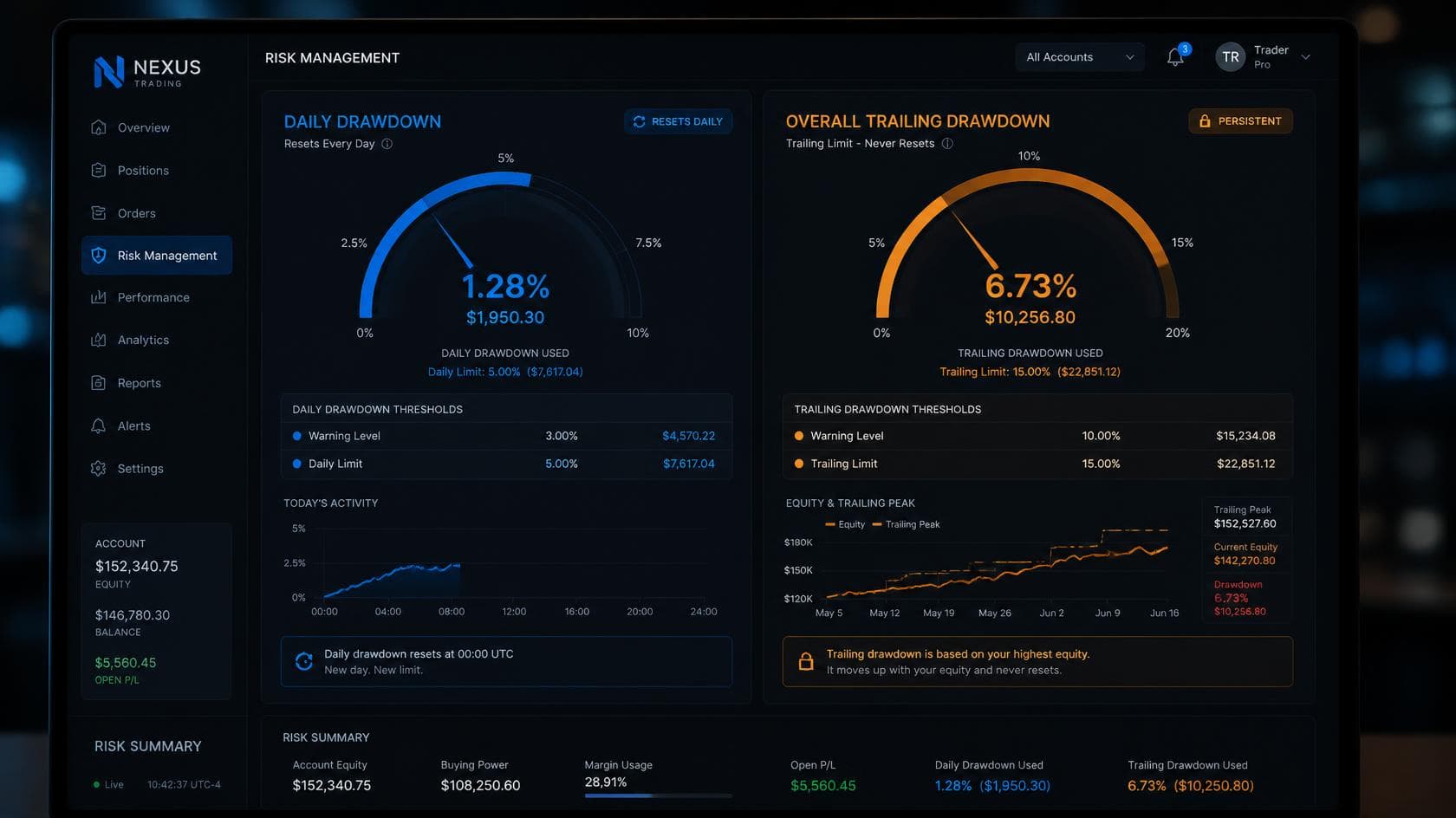
Drawdown limits are one of the most misunderstood aspects of prop trading evaluations. Every prop firm sets both daily and overall drawdown limits, and understanding the difference between them is critical. The daily drawdown resets at the end of each trading day, giving you a fresh risk budget every morning. The overall drawdown, however, tracks your account's maximum decline from its highest equity point. This means that even if you recover from a loss, the drawdown has already been recorded. At FFT, we use trailing drawdown on some accounts, which means the drawdown limit moves up as your account grows, but it also moves down if your account declines. This design rewards consistent growth while protecting against large losses. Static drawdown, on the other hand, stays fixed at your starting balance, which can be advantageous for swing traders who experience natural equity fluctuations. Know which type applies to your account and plan your trading around it.
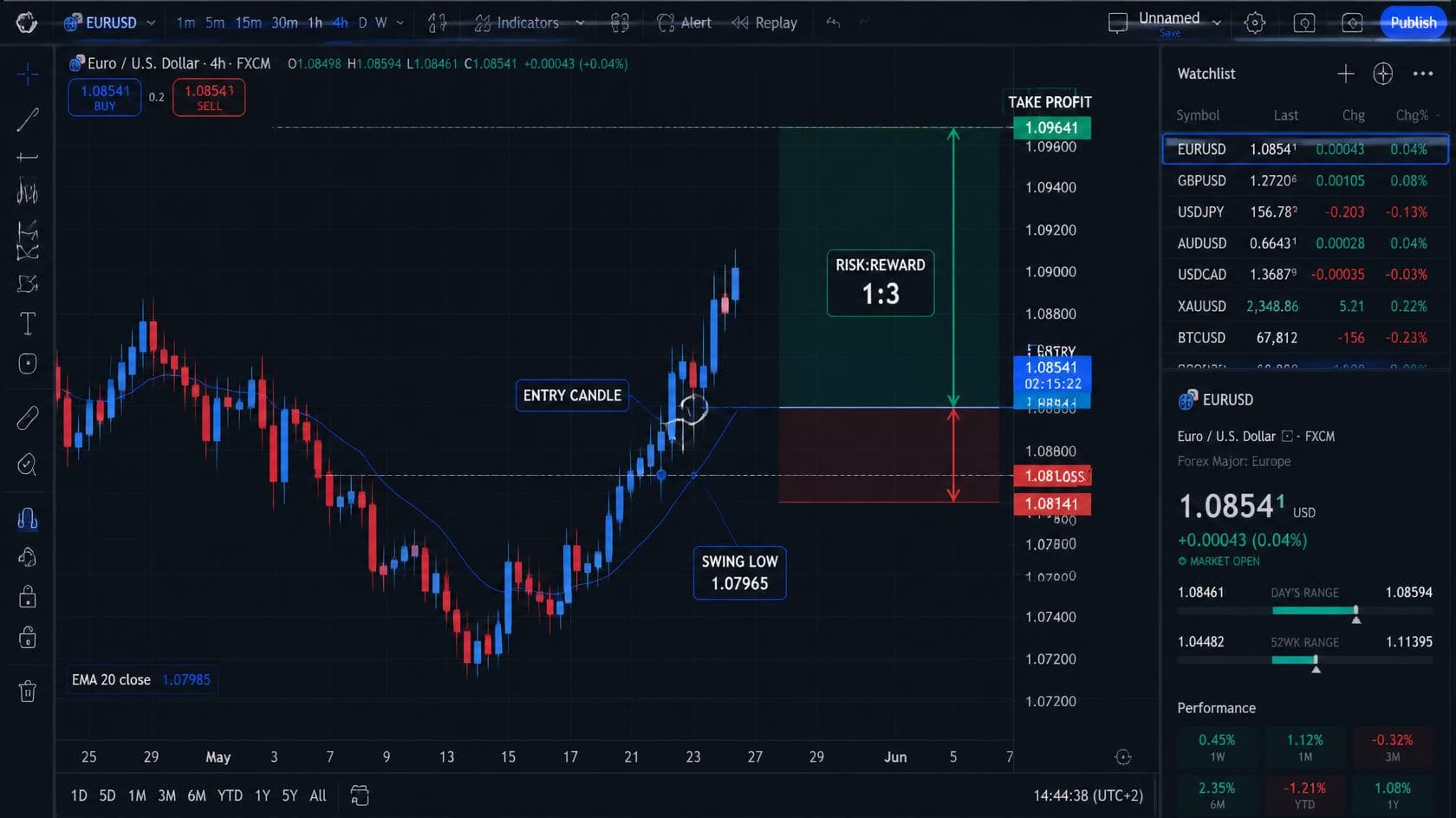
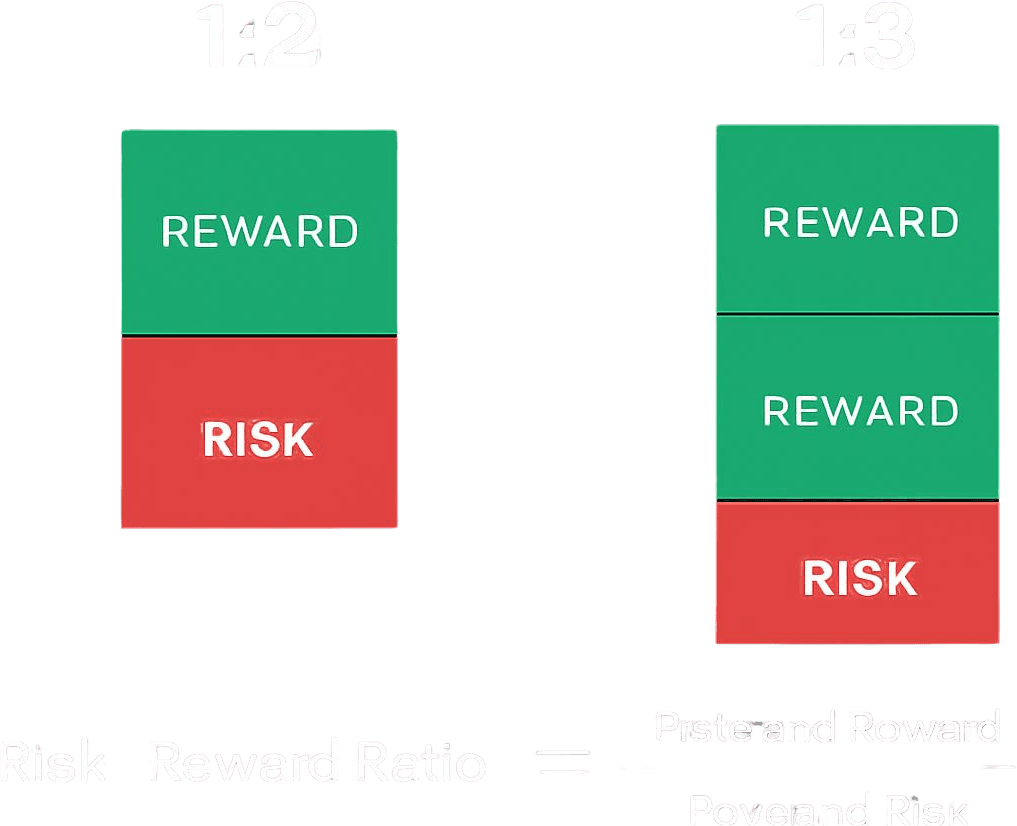
Risk-reward ratio is another concept that every prop trader should understand deeply. The risk-reward ratio compares how much you're willing to lose on a trade to how much you stand to gain. A ratio of 1:2 means you're risking $1 to make $2. A ratio of 1:3 means you're risking $1 to make $3. The beauty of a positive risk-reward ratio is that you don't need to win every trade to be profitable. If you risk $100 to make $300 on each trade, and you win only 40% of the time, you're still making money. At FFT, we encourage traders to look for setups where the potential reward significantly outweighs the risk. This doesn't mean chasing every trade that looks good — it means being selective and only taking trades where the math works in your favor. Over time, a solid risk-reward approach combined with disciplined position sizing is one of the most reliable paths to passing your evaluation.
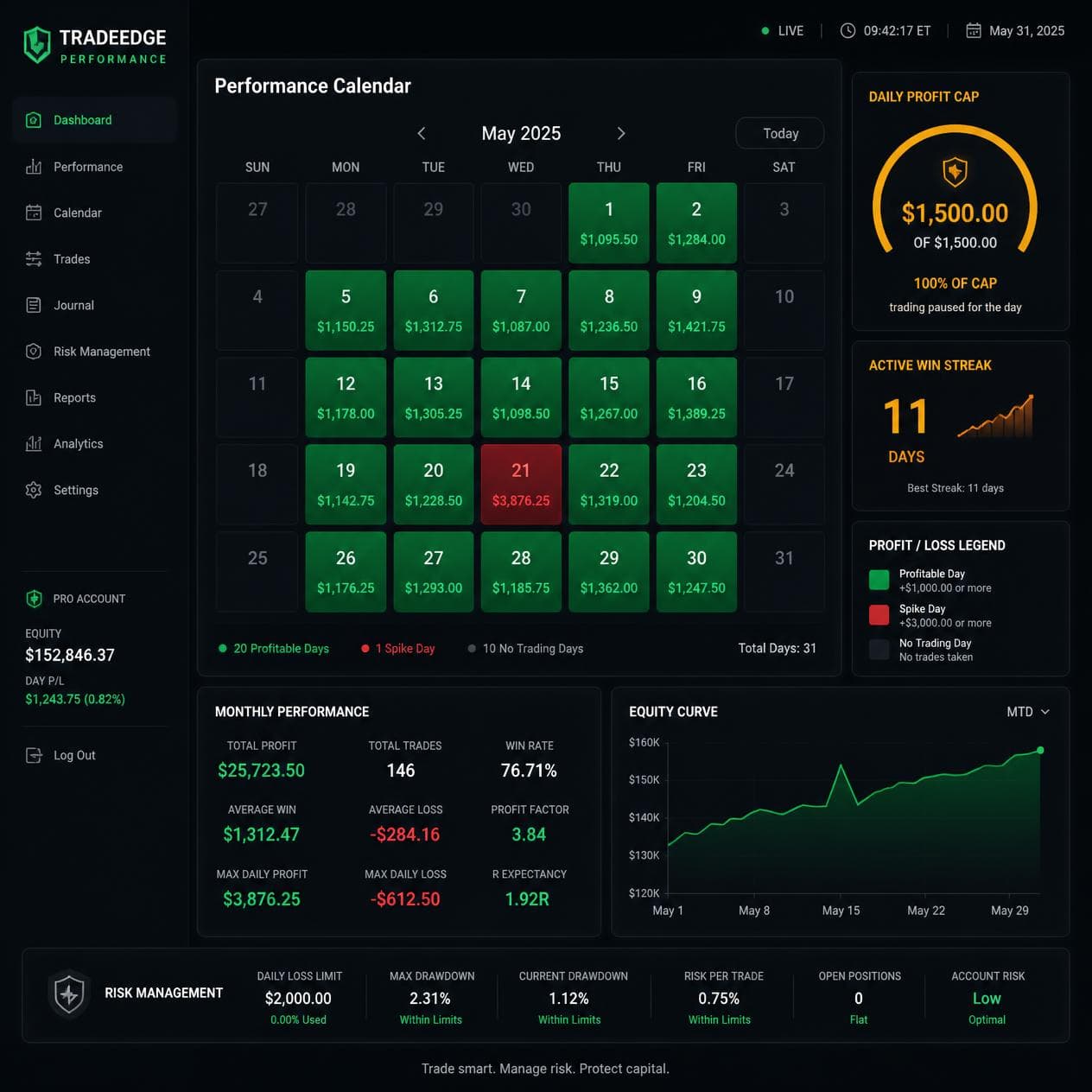
Consistency is a requirement that surprises many new prop traders. Most firms, including FFT, require a minimum number of trading days and may limit the percentage of profit you can earn on any single day. These rules exist to prevent traders from gambling on high-risk setups and to reward steady, disciplined performance. A trader who makes 1% every day for 20 days is far more likely to pass than a trader who makes 10% in one day and then loses it all the next. Consistency demonstrates that you have a repeatable process and that you can follow it under pressure. It also shows that you understand the difference between luck and skill. If you want to pass your evaluation, focus on steady growth rather than home runs. The tortoise beats the hare in prop trading every time.
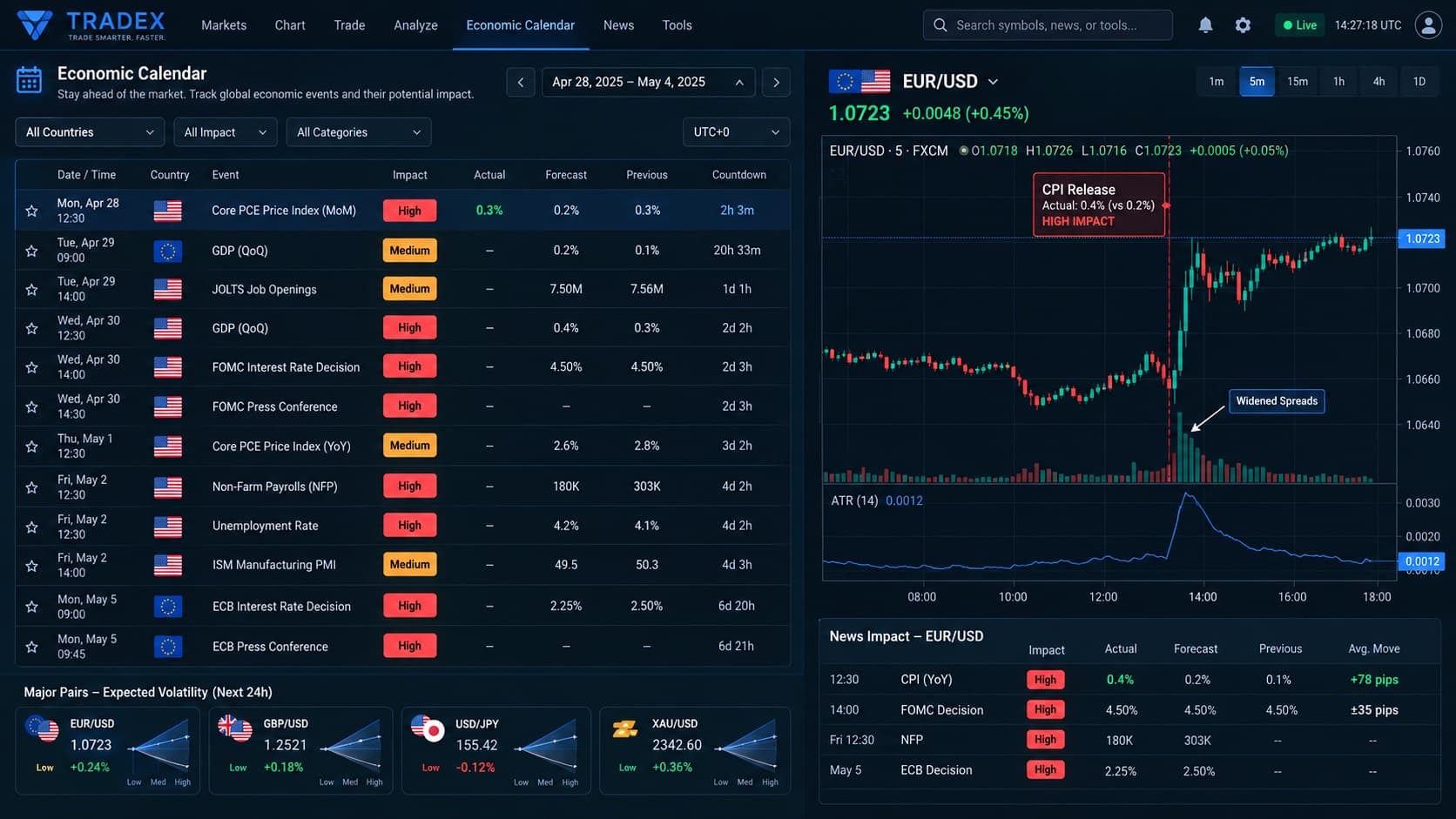
News trading and event risk deserve special mention in any discussion of risk management. High-impact news events — such as central bank announcements, employment reports, and geopolitical developments — can cause extreme volatility in the markets. spreads widen, liquidity dries up, and prices can gap dramatically. At FFT, we have specific rules around news trading that vary by account type. Some accounts allow news trading during the evaluation phase but restrict it in funded accounts. Others allow it with conditions. The key is to understand these rules before you trade and to respect the inherent risks of trading through news events. If you choose to trade news, reduce your position size significantly, use wider stop-losses, and be prepared for slippage. Many traders blow their accounts because they underestimate how much damage a single news event can do. Don't be one of them.
Psychology and risk management are inseparable. You can have the best risk management rules in the world, but if you can't follow them when it matters most, they're useless. Fear makes you move your stop-loss further away when a trade goes against you. Greed makes you increase your position size after a win. Revenge trading makes you ignore your daily loss limit and keep going after a bad day. The traders who succeed are the ones who have internalized their risk rules to the point where following them becomes automatic. This takes practice. Start by writing down your risk rules and reviewing them before every trading session. Over time, they'll become second nature. At FFT, we've seen traders pass their evaluations not because they had the best strategies, but because they had the discipline to follow their risk management plan every single day.
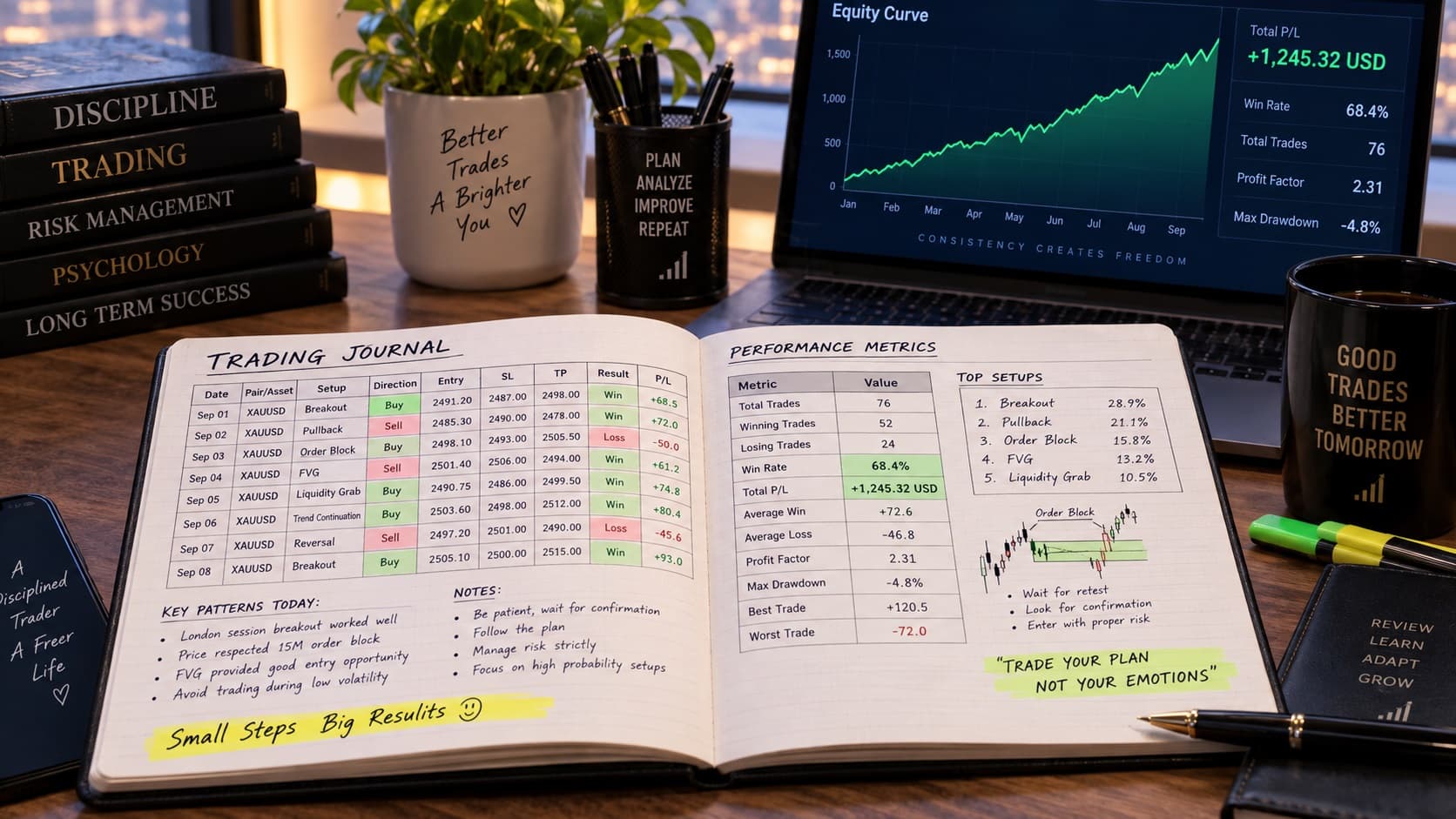
Building a risk management framework that works for you requires honest self-assessment. What's your maximum tolerable loss per trade? What's your maximum daily loss? How many trades will you take in a day? What timeframes will you trade? What markets will you avoid? Answer these questions before you start your evaluation, not during it. A well-defined risk framework gives you boundaries that keep you safe when emotions run high. It also makes decision-making easier. When a setup appears, you already know whether it fits your risk parameters. If it doesn't, you walk away. No debate, no second-guessing. This is how professional traders operate, and it's how you need to operate if you want to pass your evaluation and build a long-term career as a funded trader.
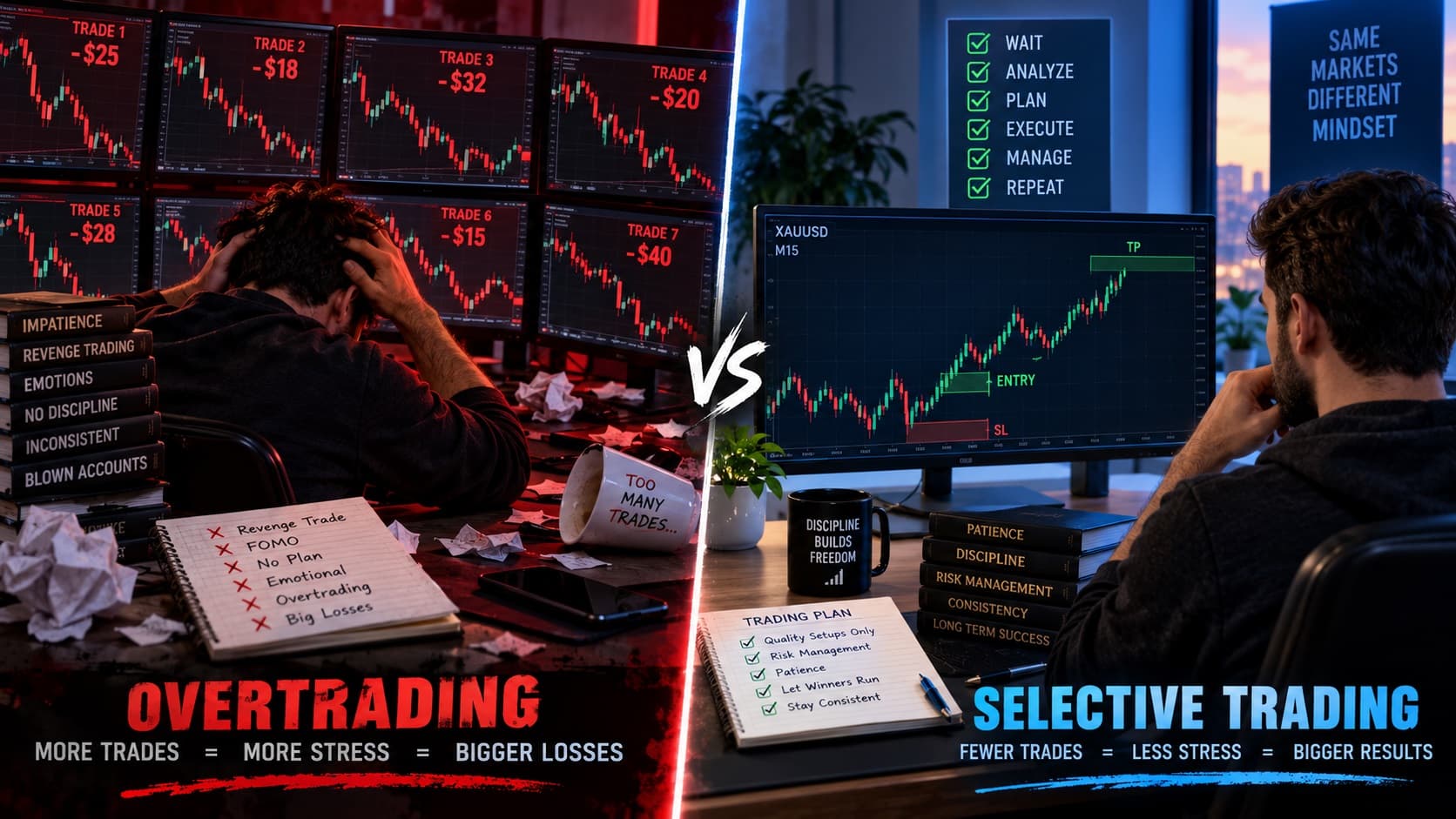
At FFT, our risk management rules are designed to protect traders from themselves while rewarding those who trade with discipline. We've seen thousands of traders go through evaluations, and the ones who succeed share a common trait: they respect the risk. They don't try to get rich quick. They don't chase losses. They follow their plan, manage their positions, and treat every trade as a business decision. If you can adopt this mindset, passing your evaluation is not a matter of if — it's a matter of when. Start with small position sizes, use stop-losses on every trade, track your drawdown daily, and never let emotions override your risk rules. The market will always be there. Your account won't if you don't protect it.