
Every experienced trader was once a beginner. The difference between those who succeed and those who quit is often learning from mistakes instead of repeating them. At FFT, we've evaluated thousands of traders, and the patterns of failure are remarkably consistent. The same mistakes show up again and again, across different markets, different account sizes, and different experience levels. Understanding these mistakes before you make them is the single fastest way to accelerate your development as a trader. In this guide, we'll walk through the most common pitfalls that trip up new prop firm traders, explain why they happen, and give you concrete strategies to avoid them. Whether you're preparing for your first evaluation or you've already failed a few, this guide will help you build the habits that lead to long-term success.

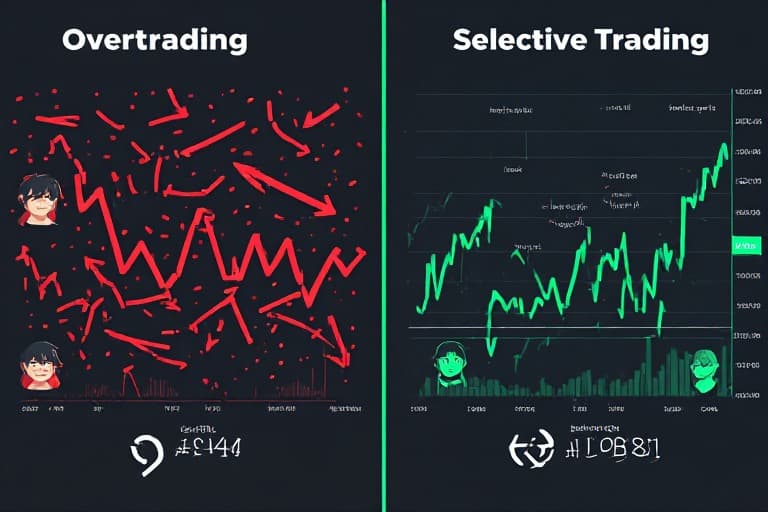
Overtrading is, without question, the number one mistake new traders make. It manifests in many forms: taking low-quality setups because you feel like you need to be in the market, trading too many pairs at once, entering trades during choppy conditions just to stay active, or increasing your position size to make up for a slow day. The root cause is almost always psychological — a belief that activity equals productivity, or a fear of missing out on a move. The reality is the opposite: every trade you take is a risk event. The more trades you take, the more risk events you create. Professional traders are selective. They wait for setups that meet every single criterion of their strategy. They're comfortable sitting on their hands for hours or even days when the market isn't offering what they want. The cure for overtrading is simple but not easy: define your setup criteria in writing, and make a rule that you only take trades that meet every single criterion. No exceptions. If the setup isn't there, you don't trade. Period. At FFT, we've found that traders who take fewer, higher-quality trades have significantly higher evaluation pass rates than traders who are constantly in the market.
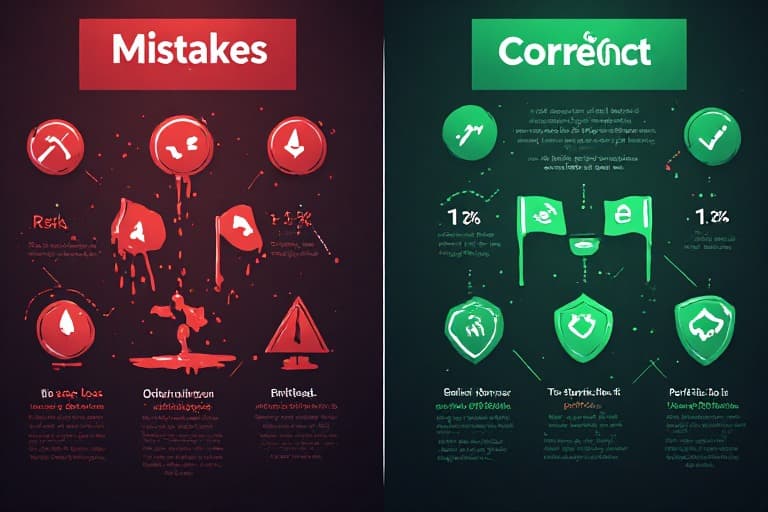
Ignoring risk management is the second most common mistake, and it's the one that ends careers fastest. New traders often skip stop-losses, use position sizes that are too large for their account, or ignore their daily loss limits when things go wrong. The math is unforgiving: a 50% loss requires a 100% gain to recover. A 90% loss requires a 900% gain. When you risk 5% or 10% per trade, a normal string of losses will wipe out your account before you have a chance to find your edge. The 1-2% risk per trade rule isn't a suggestion — it's a survival requirement. It's not about being conservative; it's about ensuring that no single trade can do catastrophic damage. Stop-losses are equally non-negotiable. Every trade must have a predetermined exit point for when you're wrong. Not a mental stop-loss — a real, hard stop-loss placed in the market. Mental stops fail because human psychology is designed to hope, not to cut losses. At FFT, our evaluation rules enforce many of these principles, but the traders who succeed are the ones who internalize them and make them automatic. Risk management isn't exciting. It doesn't feel like 'making money.' But it's the reason you're still trading after a year.
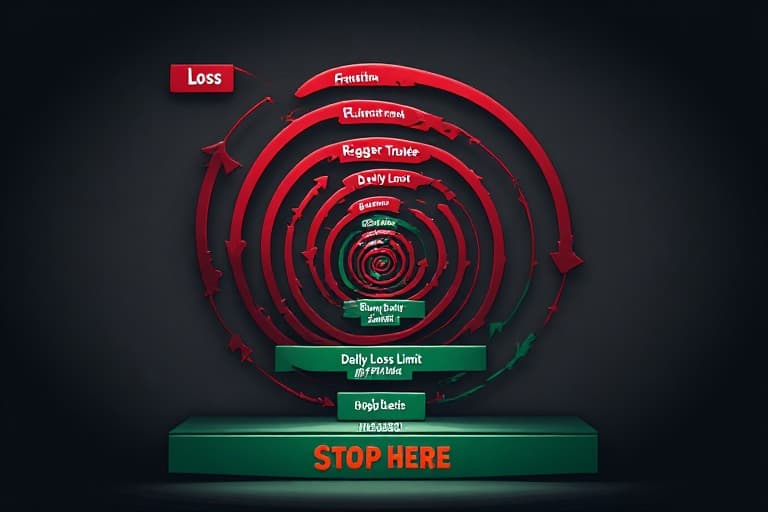
Chasing losses — often called revenge trading — is one of the most destructive behavioral patterns in trading. It happens like this: you take a loss, you feel frustrated, you want to get back to break-even immediately, so you take another trade. Usually it's a trade you wouldn't normally take. The position size is larger. The setup is weaker. The risk parameters are ignored. If that trade loses, the spiral accelerates. Within an hour, you've blown your daily loss limit, your account is down 5-10%, and you're emotionally exhausted. The market doesn't care that you lost money. It doesn't owe you a win. The only way to break this cycle is to have a hard daily loss limit that stops you from trading for the rest of the day. No exceptions. If you hit your daily loss limit, the trading day is over. You walk away. You review your trades. You come back tomorrow with a clear head. This rule removes the decision from your emotional state and places it in a pre-committed system. Over time, you learn that a single bad day doesn't define you, and that the ability to stop trading is a sign of professionalism, not weakness.
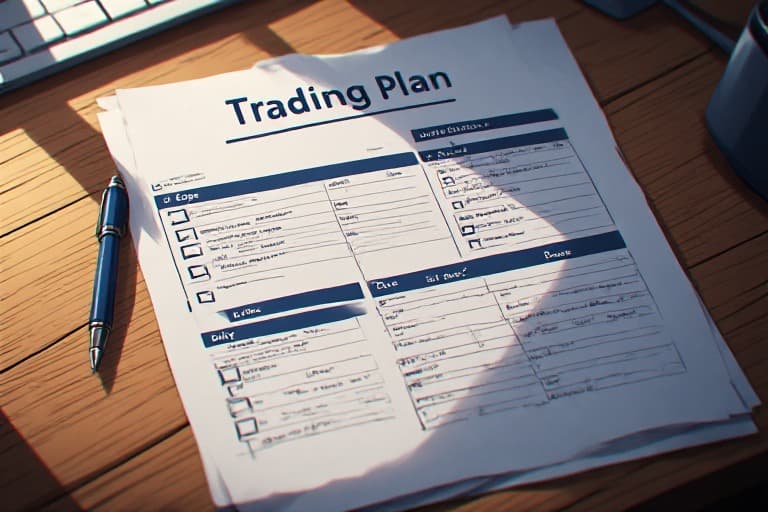
Trading without a plan is like driving without a destination — you might get somewhere, but it probably won't be where you wanted to go. A trading plan is not a vague intention to 'follow the trend.' It's a written document that specifies: your edge, your entry criteria, your exit criteria, your risk management rules, your daily routine, your maximum daily loss, your maximum drawdown, your position sizing methodology, your trading hours, your preferred markets and timeframes, and your process for review and improvement. If you don't have this written down, you don't have a plan — you have a hope. The act of writing forces clarity. It reveals gaps in your thinking that you wouldn't notice otherwise. And when you're in the heat of a trade, you don't want to be making decisions — you want to be following your plan. At FFT, we've seen traders with mediocre setups pass evaluations simply because they had a clear plan and followed it. We've also seen traders with excellent setups fail because they made emotional decisions in the moment. A plan is your anchor. Write it down. Keep it visible. Follow it.
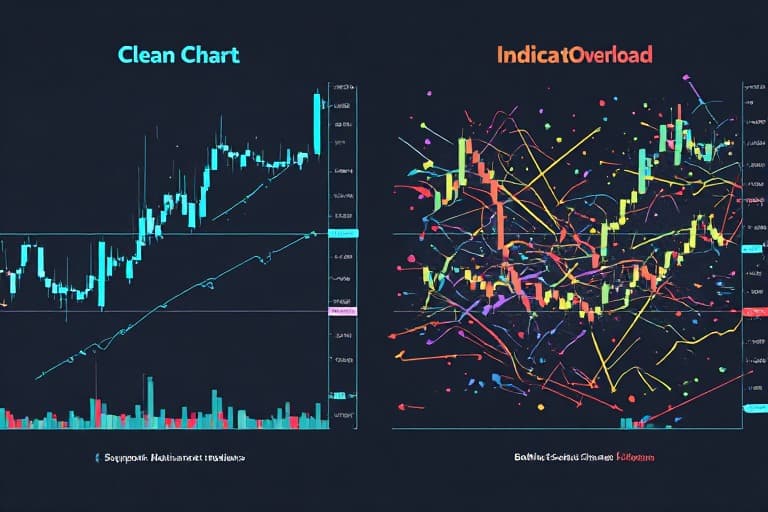
Over-reliance on indicators is a classic beginner trap. New traders often stack RSI, MACD, Bollinger Bands, stochastic oscillators, moving averages, and half a dozen other indicators on their charts, all competing for attention. The result is analysis paralysis — they can't make a decision because the indicators are giving conflicting signals. RSI says oversold, MACD says bearish, price is at resistance but the moving average is bullish. What do you do? The solution is simplicity. All indicators are derived from price and volume data. They are lagging derivatives of what the price has already done. The price chart always comes first. Choose one or two indicators that complement your trading style and master them. If you're a trend follower, a moving average and MACD might be all you need. If you're a swing trader, RSI and Bollinger Bands can help you identify overbought and oversold conditions. But the price action — support, resistance, trend, candlestick patterns — should always be your primary decision-making tool. Use indicators to confirm what the price is already telling you, not to predict what the price will do next. At FFT, the traders who succeed are usually the ones with the cleanest charts. Complexity does not equal accuracy.
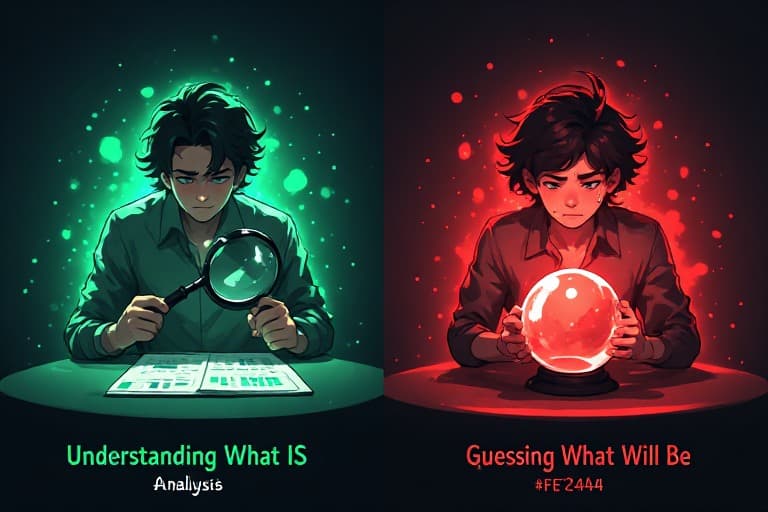
Confusing analysis with prediction is a fundamental misunderstanding of what trading is. Analysis is about understanding what the market is currently doing and what it has done in the past. Prediction is about guessing what the market will do in the future. No one can predict the future with certainty — not you, not the best analyst on Wall Street, not the most sophisticated algorithm. The goal of analysis is not to be right all the time. The goal is to identify setups where the probability of success is higher than the probability of failure, and where the potential reward justifies the risk. When you approach trading as prediction, you take every loss personally because it feels like a failed prediction. When you approach trading as probability, a loss is just a data point — it was a valid setup that happened to be in the losing percentage. This shift in mindset is transformative. It frees you from the emotional rollercoaster of being 'right' or 'wrong' and lets you focus on what matters: following your strategy and managing your risk. At FFT, we see this distinction clearly in our evaluation data. Traders who treat analysis as a tool for risk management consistently outperform those who treat it as a crystal ball.
Ignoring the economic calendar is a compliance risk and a strategic blind spot. High-impact news events — central bank rate decisions, non-farm payrolls, GDP releases, inflation reports — can cause extreme volatility, spread widening, and price gaps that trigger stop-losses at terrible prices. Many prop firms, including FFT, have specific rules about trading through high-impact news. Some accounts restrict trading during these windows entirely. Others require wider stop-losses or reduced position sizes. But beyond compliance, ignoring the calendar means you're flying blind into volatility storms. You don't need to become an economist, but you do need to know what events are scheduled for the day, what the market expects, and how those events typically affect your traded pairs. Build a habit of checking the economic calendar every morning before you trade. Mark the high-impact events on your chart. Decide in advance how you'll handle them — reduce position size, widen stops, or stay out entirely. This isn't just risk management; it's professionalism.
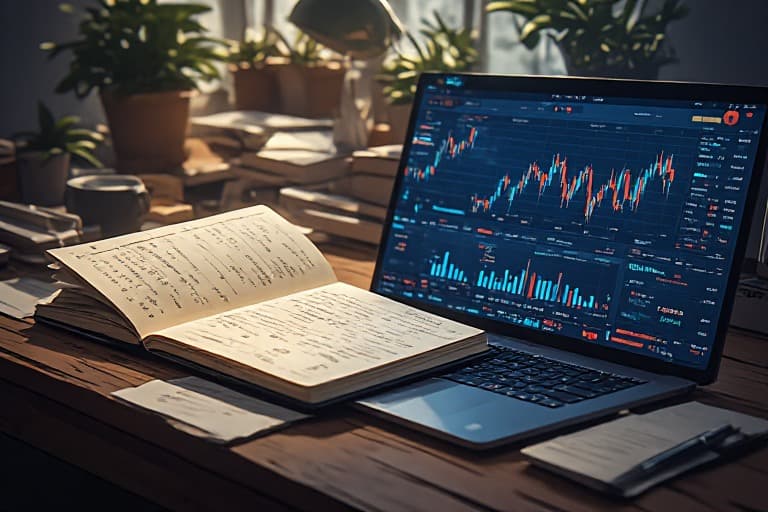
Failing to journal your trades is the mistake that guarantees you'll repeat all the others. A trading journal is not just a record of wins and losses. It's a mirror that reflects your decision-making patterns, your emotional triggers, and your behavioral weaknesses. Every trade should be documented before you enter it: the setup, the market conditions, your reasoning, your risk parameters, and your expected outcome. After the trade closes, record the actual outcome and review whether your original analysis was sound. Over time, patterns emerge. You might notice that you perform poorly on Mondays, or that you close winning trades too early when the market is volatile, or that you overtrade after three consecutive wins. These insights are priceless because they allow you to address specific weaknesses rather than blaming 'bad luck.' The traders who journal consistently are the ones who improve. The traders who don't are the ones who stay stuck at the same level for years. At FFT, we make journaling a requirement for our funded traders because we know it's the single most effective tool for long-term development. Start journaling today, even if you're on a demo account. The habit matters more than the format.
Trading without understanding market structure is like trying to navigate a city without a map. Market structure — the sequence of swing highs and swing lows that form the skeleton of price movement — tells you which side of the market has control. A healthy uptrend creates higher highs and higher lows. A healthy downtrend creates lower highs and lower lows. When this structure breaks, it signals a potential trend change. Beginners often trade against the structure because they focus on a single timeframe or a single indicator. They short a pullback in a strong uptrend because RSI is overbought. They buy a bounce in a downtrend because price hit a moving average. Understanding structure keeps you on the right side of the market. Start by simply identifying the sequence of swing points on your daily and 4-hour charts. Are they making higher highs and higher lows? Lower highs and lower lows? This simple observation will keep you aligned with the dominant trend more often than any indicator.

Expecting instant results is a mindset mistake that kills more trading careers than any technical error. Trading is a skill, and like any skill, it takes time to develop. You wouldn't expect to play piano at a concert level after two weeks of practice. You wouldn't expect to compete in a marathon after a month of running. Yet many new traders expect to pass a prop firm evaluation and start making consistent profits within their first few months. When it doesn't happen, they get discouraged, blame the market, blame the prop firm, or blame their strategy — and they quit. The traders who succeed are the ones who treat trading as a long-term craft. They measure progress in quarters and years, not days and weeks. They celebrate small improvements: following their rules for a full week, reducing their emotional reactions, improving their journal quality. They understand that the evaluation is not the goal — it's a milestone on a much longer journey. If you approach trading with this mindset, every setback becomes a lesson, every loss becomes data, and every challenge becomes an opportunity to improve. The market will always be there. The question is whether you'll still be there to trade it.
At FFT, we see these mistakes every day, and we're here to help you avoid them. Our evaluation process is designed to test your discipline as much as your skill. The traders who pass aren't the ones who never make mistakes — they're the ones who recognize their mistakes quickly, learn from them, and adjust. Start with a clear plan, respect your risk limits, journal every trade, and treat trading as a craft you're committed to mastering. The path from beginner to funded trader is well-worn. Thousands have walked it before you. The only question is whether you'll learn from their mistakes or insist on making your own. The market will always be there. Your opportunity to learn from these mistakes and build a sustainable career is right now.